

A century has passed since two of the most influential musicians in jazz history were born — and, boy, did they leave some big shoes to fill. Or, rather, some mighty big horns to blow. Born just four months apart in 1926, trumpeter Miles Davis and saxophonist John Coltrane didn’t just help shape modern jazz; they rewrote the rulebook.
As part of the ongoing Centennial celebration of the two, Columbia Records and Legacy Recordings are re-releasing the massive nine-LP box set of Miles Davis & John Coltrane – The Complete Columbia Recordings 1955–1961, arriving November 6th, 2026.
If there’s ever been a reason to clear some serious shelf space in your vinyl collection, this is it.
Originally released as a box set in 1999, the recordings — pressed on vinyl in an extremely limited edition run via Mosaic Records — earned two GRAMMYs. This time around, the jazz gods have smiled upon the masses, with Columbia and Legacy making all 58 tracks widely available across nine glorious vinyl records (or six CDs, if that’s your modality of choice), including 18 previously unreleased takes exclusive to this collection.
But, before we drop the needle, a little history lesson is in order. By the mid-1950s, Miles Davis was already something of a jazz revolutionary. Having cut his teeth alongside bebop pioneer Charlie Parker in the 1940s, Davis developed a distinctive trumpet style that favored emotion, restraint, and melody over the dizzying technical gymnastics dominating the genre. While other musicians were busy cramming as many notes as humanly possible into a solo, Miles understood the power of playing simpler.
The silence between notes spoke volumes over the notes themselves.
John Coltrane, on the other hand, hadn’t quite found his footing in the early 50s. Despite stints with Dizzy Gillespie, Earl Bostic, and Johnny Hodges, the tenor saxophonist struggled in the jazz world due to his unconventional phrasing and complex improvisations. But when Davis recruited Coltrane into his newly assembled quintet in 1955, the pairing was anything but predictable.
Alongside pianist Red Garland, bassist Paul Chambers, and drummer Philly Joe Jones, Miles and Coltrane were the yin to each other’s yang: Miles was cool, calculated, and economical; Coltrane was restless, exploratory, and bombastic. Where Davis left space, Coltrane filled it.
Where one whispered, the other roared.
The earliest recordings in the box set capture this formula in its infancy, with bebop-driven numbers like “Two Bass Hit” and Charlie Parker’s “Ah-Leu-Cha”. By the time the group recorded Thelonious Monk’s “‘Round Midnight” in 1956, Davis and Coltrane were becoming a formidable force, balancing the trumpeter’s reserved melodies against the saxophonist’s adventurous solos.
Of course, the Columbia recording years weren’t all smooth sailing. The group endured personnel changes, personal struggles, and more than a few disagreements. Coltrane was even fired before eventually returning to the fold. Apparently, changing the course of music history doesn’t necessarily make for a harmonious workplace.
But, as the lineup evolved, so did the sound.
The addition of alto saxophonist Cannonball Adderley in 1958 transformed the quintet into a sextet, bringing another powerhouse improviser into the mix. On Milestones, the group began moving away from the rapid-fire chord progressions of bebop toward something far more spacious — modal jazz.
For the unaware, modal jazz gives musicians more freedom to explore melodies without constantly navigating complex chord changes. Think of it as trading a tightly mapped highway for the open road… Miles and Coltrane were more than happy to take that detour.
The title track “Milestones” offers an early glimpse of this systemic delineation, with Davis delivering his characteristic phrasing and Coltrane stretching harmonic possibilities. On “Straight, No Chaser”, Coltrane’s cascading runs eventually become known as his “sheets of sound”: dense, rapid sequences of notes that seem to tumble over one another without ever losing their purpose.
By 1959, all that experimentation culminated in what many consider one of the greatest jazz albums of all time — ‘Kind of Blue’.
Featuring Davis, Coltrane, Adderley, pianist Bill Evans (with Wynton Kelly appearing on “Freddie Freeloader”), Chambers, and drummer Jimmy Cobb, the album strips jazz down to its emotional essentials. Gone were many of the harmonic restrictions that had defined earlier styles. In their place came atmosphere, intuition, and a conversational approach to improv.
The impact was enormous. Kind of Blue helped establish modal jazz as a defining movement, influencing generations of musicians across jazz, rock, soul, funk, and beyond. Davis would continue reinventing himself through orchestral jazz, electric experimentation, and jazz fusion, while Coltrane pushed further into harmonic complexity, spiritual exploration, and the free jazz movement. The two artists’ influence rippled through future jazz greats, like Herbie Hancock and Wayne Shorter, out to countless other experimental musicians today. And to think much of that musical revolution can be traced back to the sessions captured in this collection…
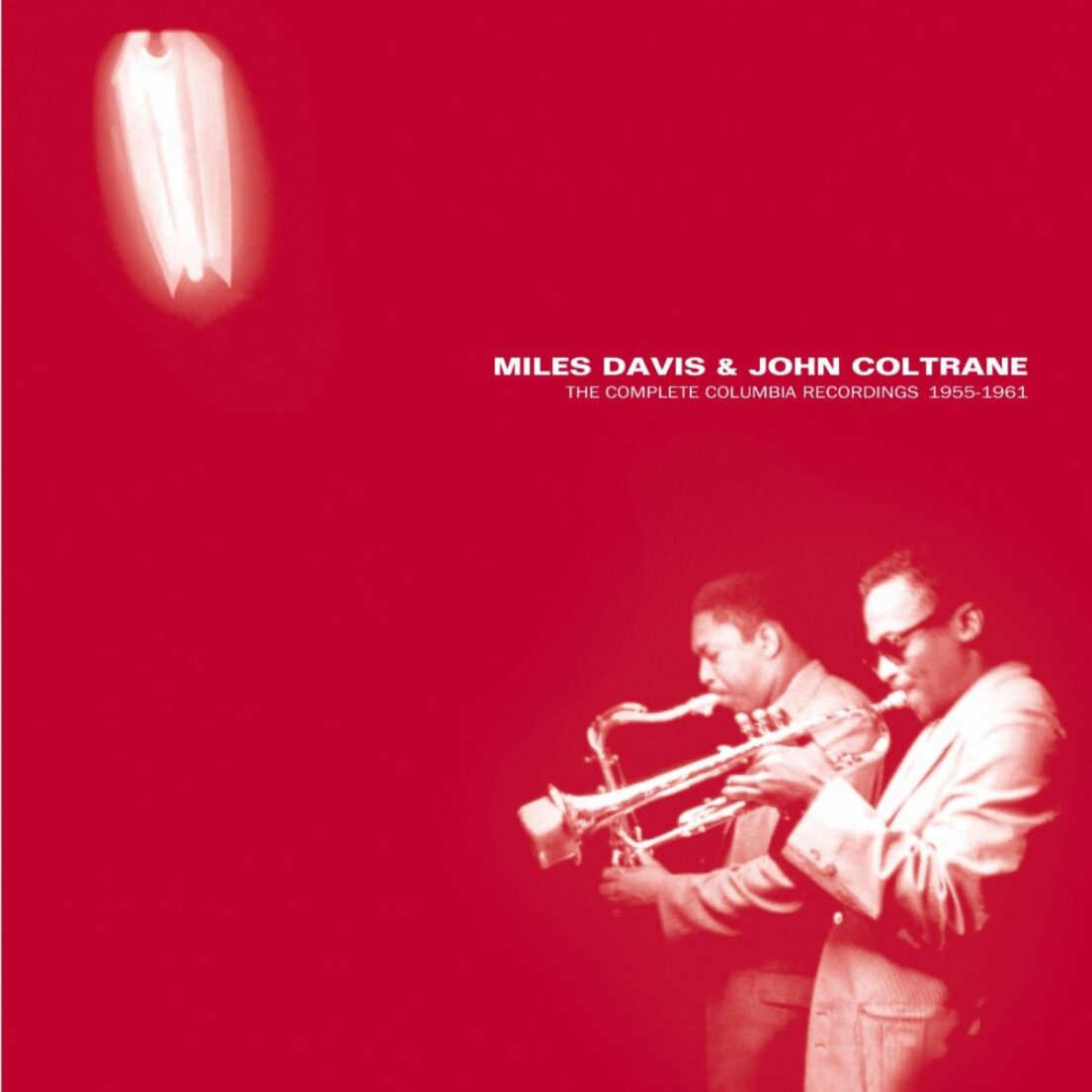
What makes The Complete Columbia Recordings particularly compelling, however, isn’t simply the inclusion of familiar pieces; it’s the opportunity to hear how those classics came together. Unlike a traditional greatest hits compilation, this box set follows the studio recordings chronologically, incorporating alternate takes, false starts, and even snippets of conversation. Hearing multiple versions of “Ah-Leu-Cha”, “Milestones”, and “Flamenco Sketches” offers an inside glimpse into the group’s creative process, revealing how subtle changes in phrasing, tempo, and interplay could transform an entire track. There’s even a false start of “Sweet Sue, Just You” featuring a discussion between Davis and legendary composer Leonard Bernstein.
Talk about being a fly on the wall…
These moments are particularly valuable because jazz, at its core, is a living, breathing conversation. No two performances are ever quite the same and even the greatest musicians in history were constantly experimenting, adjusting, and occasionally starting over.
The collection also includes live recordings from the 1958 Newport Jazz Festival and New York City’s Plaza Hotel. Freed from the confines of the recording studio, the musicians stretch their legs, trade ideas, and demonstrate just how electrifying their interplay could become in front of an audience.
Rounding out the musical journey are “Someday My Prince Will Come” and “Teo”, recorded in March 1961 after Coltrane had already begun establishing himself as a bandleader. The two tracks serve as a fitting final chapter to a partnership that — although relatively brief — forever altered the trajectory of jazz.
As for the physical release itself, Columbia and Legacy certainly haven’t skimped on the presentation.
The nine records feature Mark Wilder’s remixed and remastered audio from 2000, newly cut directly from analog tapes by Ryan Smith at Sterling Sound. Each LP comes housed in its own individually designed jacket, with the entire collection tucked into a deluxe slipcase. Accompanying the records is a 60-page adaptation of the original book, complete with rare photography, session information, and historical commentary.
Among the included writings are recollections from original producer George Avakian and drummer Jimmy Cobb, GRAMMY-winning liner notes by jazz critic Bob Blumenthal, and the original Kind of Blue liner notes penned by Bill Evans himself. For collectors who appreciate the story behind the music as much as the music itself, it’s a treasure trove of jazz history.
And it’s especially fitting to experience these recordings on vinyl.
The music was meant for physical age — not digital. The needle hitting the grooves adds the analog sound quintessential of the time. You hear playback just as the artists did. For those lacking a record player (understandable), the six-CD set of the collection is another option, complete with a 116-page book and individually designed miniature jackets. There’s also a separate two-LP compilation coming, entitled The Best of Miles Davis & John Coltrane (1955-1961).
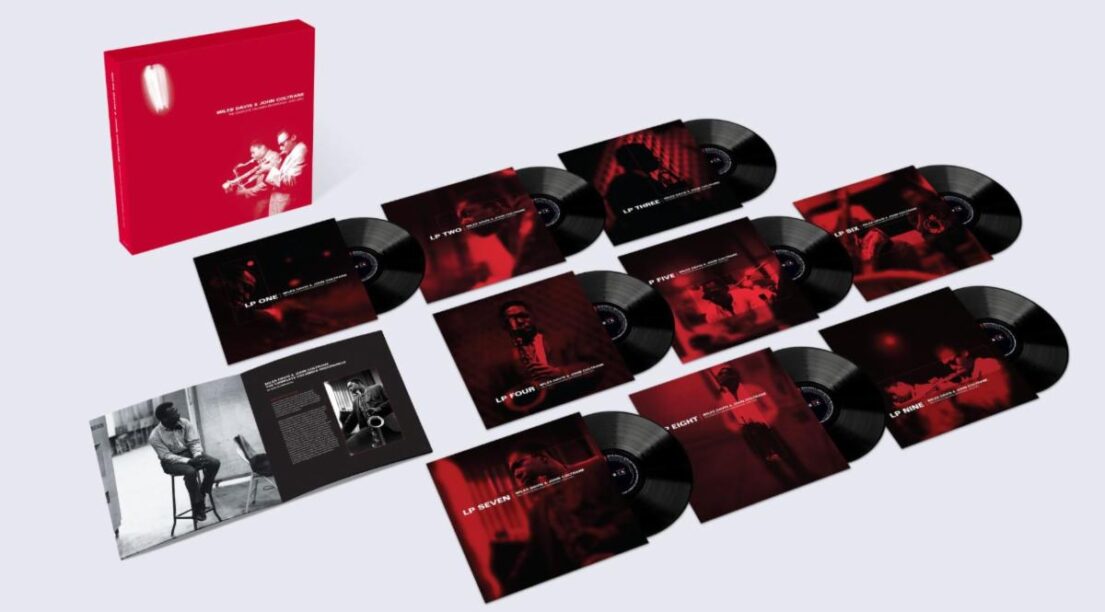
Considering both Davis and Coltrane would have celebrated their 100th birthdays in 2026, there’s no better time to revisit the music that helped define their legacies. What began as a working relationship between an established trumpeter and a relatively unknown saxophonist culminated into one of the most influential collaborations in American music.
Although Coltrane passed away in 1967 at just 40 years old, Davis continued challenging musical boundaries until his death in 1991. Decades after their passing, their music remains as adventurous, expressive, and relevant as ever. To get your hands on The Complete Columbia Recordings, visit the links below.
Get the box set:
Miles Davis & John Coltrane – The Complete Columbia Recordings 1955-1961
LP ONE SIDE A
- Two Bass Hit (alternate take)
- Two Bass Hit
- Ah-Leu-Cha (alternate take)
- Ah-Leu-Cha
- Ah-Leu-Cha (take 5)
LP ONE SIDE B
- Little Melonae
- Budo (alternate take)
- Budo
- Dear Old Stockholm
LP TWO SIDE C
- Bye Bye Blackbird (alternate take)
- Bye Bye Blackbird
- Tadd’s Delight
- Tadd’s Delight (alternate take)
LP TWO SIDE D
- Dear Old Stockholm (alternate take)
- All Of You (alternate take)
- All Of You
LP THREE SIDE E
- Sweet Sue, Just You (first version)
- Sweet Sue, Just You (false start with discussion by Leonard Bernstein & Miles Davis)
- Sweet Sue, Just You (alternate take)
- Sweet Sue, Just You
- Miles Davis comments
- ’Round Midnight
- Two Bass Hit (alternate take)
LP THREE SIDE F
- Two Bass Hit
- Billy Boy
- Straight, No Chaser (alternate take)
LP FOUR SIDE G
- Straight, No Chaser
- Milestones (alternate take)
- Milestones
LP FOUR SIDE H
- Sid’s Ahead
- Little Melonae
LP FIVE SIDE I
- Dr. Jackle
- On Green Dolphin Street
- Fran-Dance (alternate take)
LP FIVE SIDE J
- Fran-Dance
- Stella By Starlight
- Love For Sale
LP SIX SIDE K
- Freddie Freeloader (false start)
- Freddie Freeloader
- So What
LP SIX SIDE L
- Blue In Green
- Flamenco Sketches (alternate take)
- Miles Davis comments
LP SEVEN SIDE M
- Flamenco Sketches
- All Blues
LP SEVEN SIDE N
- Someday My Prince Will Come
- Teo
LP EIGHT SIDE O
- Introduction by Willis Conover
- Ah-Leu-Cha
- Straight, No Chaser
- Fran-Dance
LP EIGHT SIDE P
- Two Bass Hit
- Bye Bye Blackbird
- The Theme
LP NINE SIDE Q
- If I Were A Bell
- Oleo
LP NINE SIDE R
- My Funny Valentine
- Straight, No Chaser
Cover photo property of Atlantic Records / Getty Images
Share this article
or

Disclaimer: All views presented in this album review are those of the reviewer and not necessarily those of Top Shelf Music.
Get music updates in your inbox